
The Holy Quran, revered as the divine word of God, finds a modern and accessible form through PDF distribution.
This digital format allows for widespread access,
facilitating study and recitation for Muslims globally, offering convenience and portability.
PDF versions provide a practical means to engage with the scripture,
enabling users to download and view the Quran on various devices,
from computers and tablets to smartphones, enhancing its reach and usability.
Resources like NooreSunnat.com and the Internet Archive offer downloadable PDFs,
including options with beautiful Arabic script and features like bookmarks for easy navigation,
catering to diverse learning preferences and needs.
What is the Holy Quran?
The Holy Quran is the central religious text of Islam, believed by Muslims to be a verbatim revelation from God (Allah). It’s considered the finest work in classical Arabic literature, composed of 114 chapters (surahs) arranged roughly in order of length, though scholarly interpretations vary regarding the precise ordering principles.
As the foundational source of Islamic teachings, the Quran guides Muslims in all aspects of life – spiritual, ethical, legal, and social. It narrates stories of prophets, provides moral guidance, and outlines the principles of worship and righteous conduct. The text itself is believed to be the literal word of God, revealed to the Prophet Muhammad through the angel Gabriel over a period of approximately 23 years.
Digitally, the Quran is widely available in PDF format, allowing for easy access and study. These PDFs often feature the original Arabic text alongside translations in numerous languages, making the scripture accessible to a global audience. The availability of the Quran in PDF format is a testament to its enduring importance and the desire to share its message widely.
Significance of a PDF Version
The proliferation of Holy Quran PDFs represents a significant shift in accessibility and dissemination of Islamic scripture; Traditionally, access to a physical copy of the Quran was essential for study and recitation; however, PDFs overcome geographical barriers and financial constraints, offering a free or low-cost alternative.
PDFs provide unparalleled convenience, allowing users to carry the entire Quran on their smartphones, tablets, or computers. This portability facilitates daily reading, memorization, and reflection, regardless of location. Features like searchable text and bookmarks, often included in these digital versions, enhance the study experience.
Furthermore, PDFs enable easy sharing and distribution, fostering a wider understanding of Islamic teachings. Platforms like the Internet Archive and NooreSunnat.com actively contribute to this accessibility, offering various translations and recitations in a readily downloadable format, promoting global engagement with the Quran.

Finding Reliable Holy Quran PDFs
Locating trustworthy Quran PDFs requires careful consideration; resources like the King Fahd Complex, Internet Archive, and NooreSunnat.com offer verified, high-quality digital copies for download.
These platforms ensure authenticity and provide various options, including different translations and recitation styles, catering to diverse user preferences and needs.
King Fahd Complex Quran PDF
The King Fahd Complex for the Printing of the Holy Quran in Medina, Saudi Arabia, is a globally recognized source for high-quality Quranic materials, and their PDF offering is particularly noteworthy.
This PDF version stands out due to its beautiful and clear Arabic script, meticulously designed for readability and ease of recitation. It’s presented in a format that faithfully replicates the printed edition, ensuring accuracy and reverence.
A significant feature is the inclusion of a comprehensive bookmark side panel, allowing users to effortlessly navigate through the Quran’s chapters (surahs) and verses (ayahs). This feature is invaluable for study, reflection, and quick reference.
Available for free download through platforms like the Internet Archive, the King Fahd Complex Quran PDF is a trusted resource for Muslims worldwide seeking a reliable and aesthetically pleasing digital copy of the Holy Book. It’s a testament to the commitment to preserving and disseminating the Quranic text.
Internet Archive Resources
The Internet Archive serves as a vast digital library, offering a diverse collection of Holy Quran PDFs in various languages and formats, making it a valuable resource for global access.
Users can find numerous uploads of the King Fahd Complex Quran PDF, alongside other editions, providing options based on preference for script style and presentation. The platform’s archiving nature ensures long-term availability of these texts;
The “Borrow” and “Streaming” options allow users to access the PDFs without necessarily downloading them, catering to different needs and bandwidth limitations. This accessibility is a key benefit of the Internet Archive.
Beyond the core Quranic text, the Archive may also host related materials like translations, commentaries (Tafsir), and supplementary Islamic literature, creating a comprehensive resource for Quranic study. It’s a democratizing force, providing free access to sacred texts for all.
NooreSunnat.com and Quranic Resources
NooreSunnat.com distinguishes itself by offering a rich collection of Urdu Islamic content alongside Quranic resources, catering specifically to Urdu-speaking communities worldwide. It’s a hub for Islamic learning.
The site provides access to audio lectures (bayanat) from esteemed scholars like Mufti Taqi Usmani and Mufti Zubair Ashraf, enriching the Quranic experience with insightful commentary and interpretations. These lectures cover Tafsir and Ramadan-specific topics.
While primarily focused on audio content, NooreSunnat.com complements this with downloadable Quran PDFs, offering a holistic approach to Islamic education and spiritual growth. Nasheeds, devotional songs, are also available.
The platform’s strength lies in its focus on traditional Islamic scholarship and its commitment to providing authentic and reliable resources. It serves as a valuable link between the Quranic text and its practical application in daily life, fostering a deeper understanding.

Languages Available in Holy Quran PDFs
Numerous translations of the Holy Quran are readily available in PDF format, including English, French, German, Russian, Chinese, and Spanish,
expanding accessibility to a global audience.
Additional languages like Greek, Indonesian, Thai, and Romanian are also supported, demonstrating the widespread desire to engage with the Quran’s teachings.
English Translations
Several esteemed English translations of the Holy Quran are widely available in PDF format, catering to diverse preferences in style and interpretation. Muhammad Marmaduke Pickthall’s translation, published in 1930, is renowned for its literary quality and adherence to the original Arabic, remaining a popular choice for serious students.
Yusuf Ali’s translation, accompanied by extensive footnotes, provides detailed explanations and contextual insights, making it valuable for both beginners and advanced learners. Sahih International’s translation is appreciated for its clarity and accuracy, aiming for a straightforward rendering of the Quranic text.
These PDF versions often include Arabic text alongside the English translation, allowing readers to compare the original verses with their interpretations. Furthermore, many offer features like searchable text and adjustable font sizes, enhancing the reading experience. Accessing these translations digitally promotes wider understanding and engagement with the Quran’s message within English-speaking communities globally.
French Translations
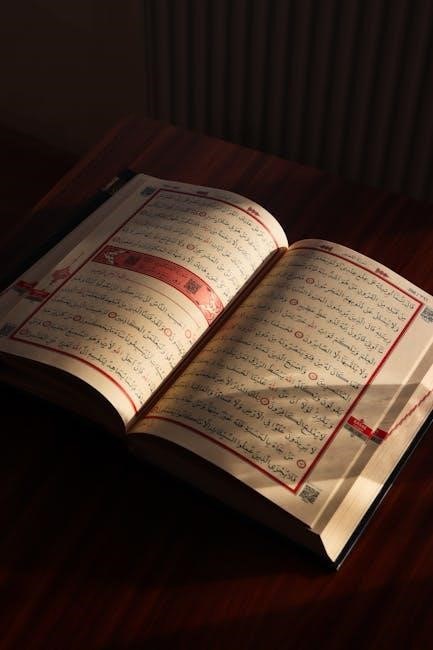
Several French translations of the Holy Quran are accessible in PDF format, serving the needs of French-speaking Muslims and those interested in studying the scripture in this language. Étienne Marc Quénam’s translation, one of the earliest, remains historically significant, though modern readers may find its language somewhat dated.
André Chouraqui’s translation is widely regarded for its poetic and literary style, aiming to convey the beauty and eloquence of the original Arabic. Jean Crespin’s translation offers a more contemporary approach, prioritizing clarity and accessibility for a broader audience;
These PDF versions frequently present the Arabic text alongside the French translation, enabling comparative study and a deeper understanding of the verses. Digital formats also offer convenient features like searchable text and adjustable font sizes, improving the reading experience. The availability of these translations in PDF format facilitates wider access to the Quran’s teachings within Francophone communities worldwide.
German Translations
Numerous German translations of the Holy Quran are readily available as PDFs, catering to the German-speaking Muslim population and those pursuing Quranic studies in German. Hartmut Bobzin’s translation is a prominent example, known for its accuracy and scholarly approach, often favored by academics and researchers.
Elmar Gries’ translation presents another option, aiming for a balance between linguistic precision and readability, making it accessible to a wider audience. Abdurrahman Lorenz’s translation is also popular, offering a clear and understandable rendering of the Arabic text into German.
These PDF versions often include the original Arabic alongside the German translation, facilitating comparative analysis and a richer understanding of the verses’ meaning. Digital accessibility allows for features like text searching and customizable fonts, enhancing the user experience. The proliferation of these PDFs supports Quranic literacy and engagement within German-speaking communities.
Russian Translations
Several Russian translations of the Holy Quran are available in PDF format, serving the needs of the Russian-speaking Muslim community and scholars. Valentin Bezukladnikov’s translation is widely recognized as a significant contribution, known for its meticulous approach and attempts at conveying the nuances of the original Arabic.
Another notable translation is attributed to G.S. Sablukov, an earlier work that remains accessible in digital form. These PDFs frequently present the Arabic text alongside the Russian translation, enabling comparative study and deeper comprehension of the Quranic verses.
The availability of these PDFs is crucial for promoting Quranic literacy and understanding among Russian speakers globally. Digital formats offer convenient features like searchable text and adjustable font sizes, enhancing accessibility and facilitating study. These resources play a vital role in religious education and practice within the Russian-speaking world.
Chinese Translations
Chinese translations of the Holy Quran in PDF format are increasingly available, catering to the growing Muslim population in China and among Chinese-speaking communities worldwide. Ma Jian’s translation is considered a prominent and widely circulated version, offering a comprehensive rendering of the Quranic text into Mandarin Chinese.
These PDFs often present the Arabic text alongside the Chinese translation, allowing for comparative study and a deeper understanding of the original meaning. Digital accessibility is particularly important given the geographical distribution of Chinese-speaking Muslims and potential restrictions on physical religious materials.
The availability of these resources facilitates Quranic literacy and religious practice within the community. Features like searchable text and adjustable font sizes enhance usability, making the Quran more accessible for study and recitation. These translations are vital for religious education and fostering a stronger connection to Islamic teachings.
Spanish Translations
Spanish translations of the Holy Quran in PDF format are readily accessible, serving the significant Spanish-speaking Muslim population globally, particularly in Spain and Latin America. Numerous translations exist, with variations in interpretation and linguistic style, offering readers choices based on preference and understanding.
These PDF versions frequently include the original Arabic text alongside the Spanish translation, enabling comparative analysis and a more nuanced comprehension of the Quranic verses. Digital distribution overcomes geographical barriers and provides convenient access to the scripture for individuals in remote areas or with limited access to physical copies.
The availability of these resources supports religious education, personal study, and the propagation of Islamic teachings within Spanish-speaking communities. Features such as searchable text and adjustable font sizes enhance the user experience, promoting Quranic literacy and engagement.
Other Available Languages
Beyond the commonly translated languages, Holy Quran PDFs are available in a remarkably diverse range of tongues, reflecting the global reach of Islam. These include Greek, Indonesian, Thai, and Romanian, catering to specific linguistic communities worldwide. The proliferation of these translations demonstrates a commitment to making the Quran accessible to all, regardless of their native language.
PDF format facilitates the distribution of these less common translations, overcoming the challenges of printing and distribution in regions with smaller Muslim populations. Digital accessibility empowers individuals to connect with the scripture in their mother tongue, fostering a deeper understanding and spiritual connection.
The availability of these resources supports religious education and personal devotion within diverse communities, promoting inclusivity and fostering a sense of belonging. Ongoing efforts continue to expand the number of available languages, ensuring wider access to the divine message.

Features of Popular Holy Quran PDFs
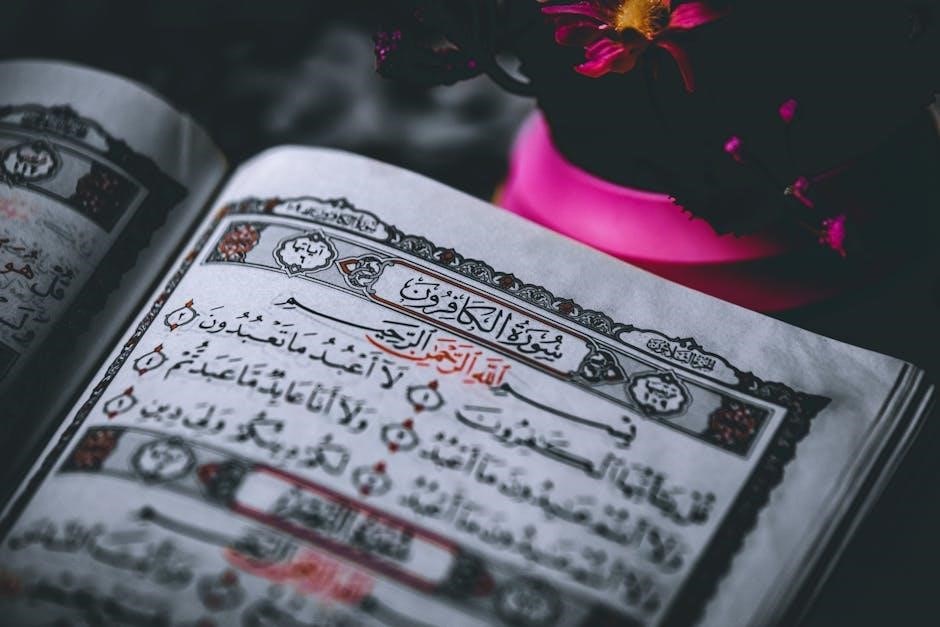
Popular PDFs boast clear Arabic script, sizable font options, and convenient bookmarks for navigation. Integrated Tafsir (commentary) enhances understanding,
providing valuable context and insights for readers.
Arabic Text with Clear Script
A cornerstone of any quality Holy Quran PDF is the presentation of the original Arabic text with exceptional clarity. This isn’t merely about legibility; it’s about honoring the sacredness of the scripture through aesthetically pleasing and accurate typography. PDFs sourced from reputable organizations, such as the King Fahd Complex, prioritize utilizing fonts specifically designed for Quranic calligraphy, ensuring each letter (harf) is distinct and properly formed.
The clarity of the script is paramount for accurate recitation (Tajweed) and comprehension. Well-designed PDFs avoid overly ornate or stylized fonts that might obscure the individual letters. Instead, they favor fonts that adhere to established rules of Islamic calligraphy, making it easier for readers to follow along during recitation and minimize errors. High-resolution imaging is also crucial, preventing pixelation or blurring that can hinder readability, especially when viewing on smaller screens.
Furthermore, many PDFs offer options to adjust the font size, catering to individuals with varying visual needs. This adaptability ensures that the Arabic text remains clear and accessible to a wider audience, promoting inclusivity and facilitating a deeper connection with the divine text.
Large Font Size Options
Accessibility is key when it comes to engaging with the Holy Quran, and large font size options within PDF versions are a crucial feature for many readers. Individuals with visual impairments, the elderly, or those simply preferring a more comfortable reading experience greatly benefit from this functionality. Reputable Quran PDFs, like those available through the Internet Archive and King Fahd Complex, often incorporate adjustable font sizes to cater to diverse needs.
The ability to increase the font size without compromising the layout or clarity of the Arabic script is essential. A well-designed PDF will dynamically reflow the text, ensuring that verses remain properly formatted even at larger sizes. This prevents text from overlapping or becoming distorted, maintaining readability. Multiple size options are ideal, allowing users to fine-tune the display to their precise preference.
Beyond visual accessibility, larger fonts can also aid in memorization (Hifz) by making the Arabic text more prominent and easier to focus on. This feature enhances the overall user experience, promoting a more inclusive and engaging interaction with the Holy Quran.
Bookmarks for Easy Navigation
Navigating the Holy Quran, with its 114 chapters (Surahs) and numerous verses (Ayahs), can be simplified significantly through the inclusion of bookmarks in PDF versions. This feature acts as a digital table of contents, allowing readers to quickly jump to specific Surahs or even individual pages within the scripture. Resources like the King Fahd Complex Quran PDF specifically highlight the availability of a bookmarks side panel for streamlined browsing.
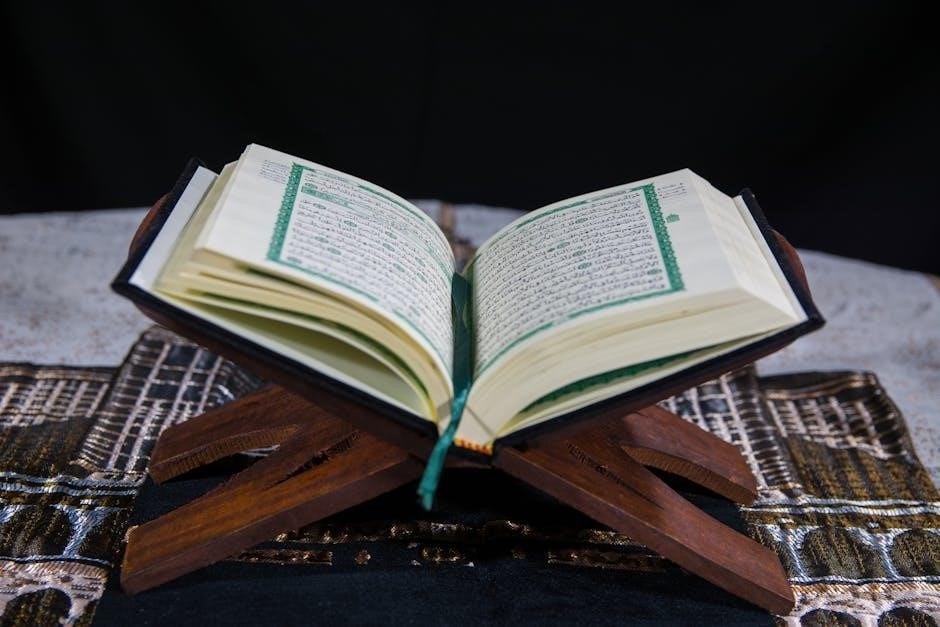
Well-structured bookmarks typically categorize Surahs sequentially, mirroring the traditional order of the Quran. More advanced PDFs may even include bookmarks for specific sections within Surahs, such as key verses or thematic groupings. This granular level of navigation is particularly useful for students of the Quran or those engaged in focused study.
The convenience of bookmarks extends beyond simple navigation; they also facilitate easy referencing and revisiting of frequently read passages; This feature enhances the overall reading experience, making it more efficient and enjoyable, promoting deeper engagement with the divine text.
Tafsir (Commentary) Integration
Understanding the Holy Quran often requires delving into its interpretations, known as Tafsir. Some advanced Holy Quran PDF versions cleverly integrate Tafsir directly within the document, offering readers immediate access to commentary alongside the Arabic text. This eliminates the need to constantly switch between separate resources, streamlining the study process.
Integrated Tafsir can manifest in various formats, including footnotes, sidebars, or even dedicated sections following each verse or Surah. Resources like NooreSunnat.com offer lectures by scholars like Mufti Taqi Usmani, providing valuable Tafsir insights, though typically as audio rather than direct PDF integration.
The benefit of this integration lies in its ability to provide context, explain complex verses, and offer different perspectives on the Quranic message. This feature is particularly valuable for those new to Quranic studies or seeking a deeper understanding of its meaning, enriching their overall learning experience.
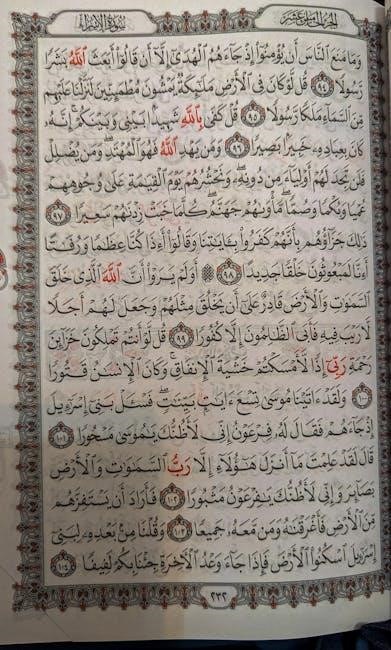
Utilizing Holy Quran PDFs for Study
Holy Quran PDFs empower focused study through accessible reading, recitation, and deeper understanding of Tafsir.
Digital formats enhance memorization techniques and convenient learning experiences.

These resources, like those from the Internet Archive, facilitate consistent engagement with the scripture,
promoting spiritual growth and knowledge acquisition for all users.
Reading and Recitation
Holy Quran PDFs significantly enhance the experience of reading and recitation, offering unparalleled convenience and accessibility. The digital format allows Muslims worldwide to engage with the scripture on various devices – computers, tablets, and smartphones – fostering a consistent practice regardless of location.
The clear Arabic script, often found in PDFs from sources like the King Fahd Complex, is crucial for accurate pronunciation and proper Tajweed. Large font size options, a common feature in these PDFs, cater to readers of all ages and visual abilities, reducing eye strain during extended recitation sessions.
Furthermore, the portability of PDFs enables recitation during travel or in situations where a physical copy of the Quran might be impractical. Consistent reading and recitation, facilitated by these digital resources, are fundamental to deepening one’s connection with the divine message and achieving spiritual enrichment.
The availability of audio recitations alongside the PDF text, sometimes offered on platforms like NooreSunnat.com, further supports correct pronunciation and enhances the overall learning experience.
Understanding Tafsir
Holy Quran PDFs often integrate or provide easy access to Tafsir, the commentary and explanation of the Quranic verses, significantly deepening understanding beyond a literal reading. This feature is invaluable for those seeking to grasp the historical context, linguistic nuances, and underlying wisdom within the scripture.
Many PDFs link directly to Tafsir resources or include integrated commentary, allowing readers to explore interpretations from renowned scholars like Mufti Taqi Usmani, whose lectures are available in audio format on platforms like NooreSunnat.com. This contextualization is crucial for accurate interpretation.
Exploring Tafsir helps unlock the multifaceted meanings embedded within the verses, revealing the Quran’s relevance to contemporary life and addressing complex theological questions. It moves beyond simple recitation to informed comprehension, fostering a more profound spiritual connection.
Utilizing Tafsir alongside the Quranic text transforms the reading experience from passive to active, encouraging critical thinking and a deeper appreciation for the divine message.
Memorization Techniques
Holy Quran PDFs, with their searchable and bookmarkable features, become powerful tools for hifz – the memorization of the Quran. The ability to quickly locate specific verses facilitates focused repetition, a cornerstone of effective memorization.
Utilizing the clear Arabic script found in PDFs like those from the King Fahd Complex aids visual retention. Repeatedly viewing the verses in a consistent format strengthens memory pathways.
Effective techniques include breaking down memorization into manageable chunks – a few verses at a time – and utilizing spaced repetition, revisiting previously memorized sections at increasing intervals.
Audio resources, often available alongside PDF versions (as found on NooreSunnat.com with Quran recitations), complement visual learning, reinforcing memorization through auditory repetition. Combining visual and auditory methods maximizes retention.
Consistent daily practice, coupled with the accessibility of Quran PDFs, makes the ambitious goal of memorizing the Quran achievable for dedicated learners.

Legal and Ethical Considerations
Respecting copyright when distributing Holy Quran PDFs is crucial, ensuring proper permissions are obtained. Authenticity verification is vital;
confirming the source’s reliability prevents the spread of altered texts.
Copyright and Distribution
Distributing Holy Quran PDFs requires careful consideration of copyright laws and ethical responsibilities. While the Quranic text itself is considered to be in the public domain,
specific translations, commentaries (Tafsir), and artistic presentations within a PDF may be protected by copyright.
Many organizations, such as the King Fahd Complex, offer freely distributable PDFs, but their terms of use should always be reviewed.
Unauthorized reproduction or modification of copyrighted material is illegal and unethical. When sharing PDFs, it’s best practice to link to the original source rather than redistributing the file directly.
Respecting the rights of translators and publishers ensures continued access to high-quality Quranic resources.
Furthermore, distributing accurate and verified PDFs upholds the integrity of the scripture, preventing the spread of misinformation or altered content. Ethical distribution promotes responsible engagement with the Holy Quran.
Authenticity Verification
Ensuring the authenticity of a Holy Quran PDF is crucial, given the potential for errors or alterations in digital copies.
When downloading from sources like the Internet Archive or NooreSunnat.com, verifying the origin and comparing it to established versions is essential.
Look for PDFs originating from reputable institutions like the King Fahd Complex, known for their accurate and standardized Quranic texts.
Cross-reference the Arabic text with known, verified manuscripts to identify any discrepancies. Pay attention to the transliteration and translation quality,
as inaccuracies can distort the meaning.
Consider the source’s reputation and transparency. A trustworthy provider will clearly state the edition and any editorial choices made.
If doubts arise, consult with knowledgeable scholars or refer to established Quranic resources to confirm the PDF’s authenticity and integrity.